|
An International Energy Agency Newsletter
Click here to view in your browser
|
|
Welcome back to Energy Snapshot, the International Energy Agency’s monthly newsletter focused on charts and data. In this edition, we look at the energy sources the world depends on today – and what changes are taking place.
|
The world is thirsty for energy. Even against a complex economic and geopolitical backdrop, global energy consumption continued to rise in 2025 – reaching the highest level on record.
But what are the energy sources to which the world is turning to meet this growing demand? The answer to these questions can be found in our Global Energy Review 2026, which offers a comprehensive annual assessment of key trends across the energy sector.
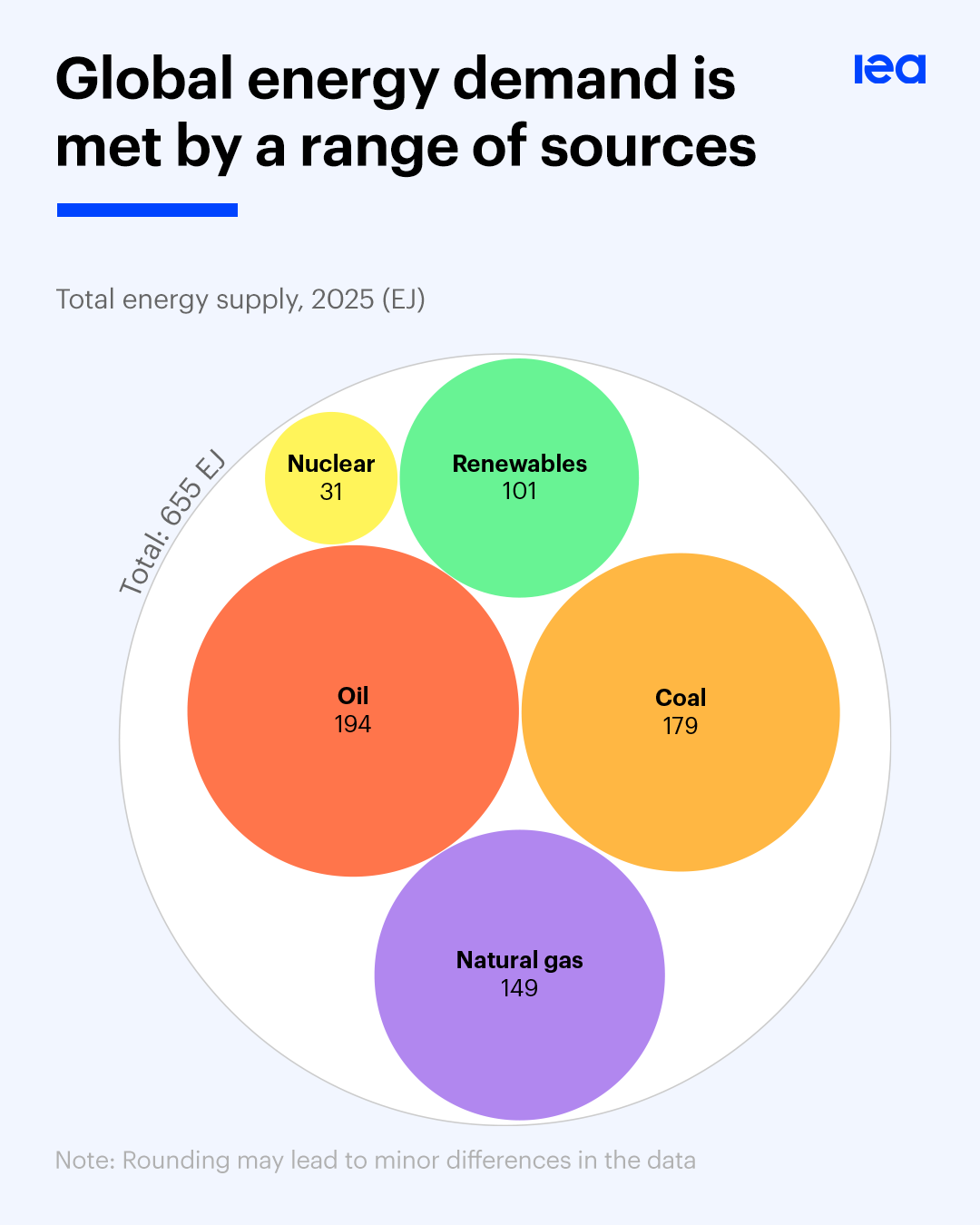
The report shows that many types of energy met global demand last year. Oil, natural gas and coal continued to play the biggest roles, accounting for almost 80% of total energy supply. Low-emissions sources – renewables and nuclear – accounted for around 20%.
|
|
|
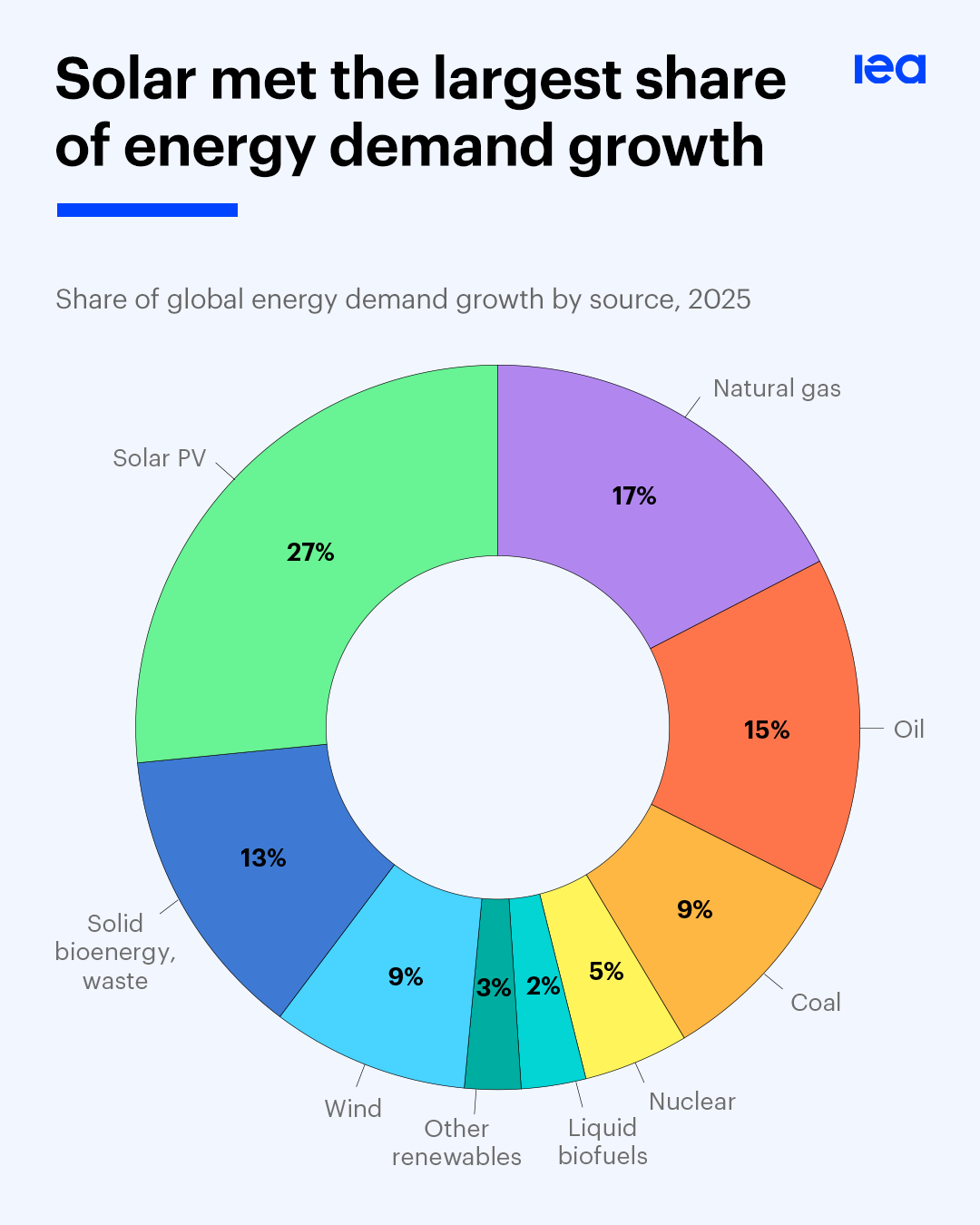
Global energy demand rose by 1.3% in 2025 (a smaller rise than in 2024 but in line with the previous decade’s average). To meet this increase, all major fuels and technologies expanded.
The trends indicate that changes to the global energy mix are gathering pace. One energy source grew much faster than the others: solar PV. It met 27% of the world’s energy demand growth in 2025 – the first time a modern renewable source covered the largest portion of growth. Natural gas covered the next largest share, at 17%, reflecting its big role in power generation in many countries. Overall, renewable sources and nuclear met nearly 60% of all growth in energy demand in 2025.
|
|
|
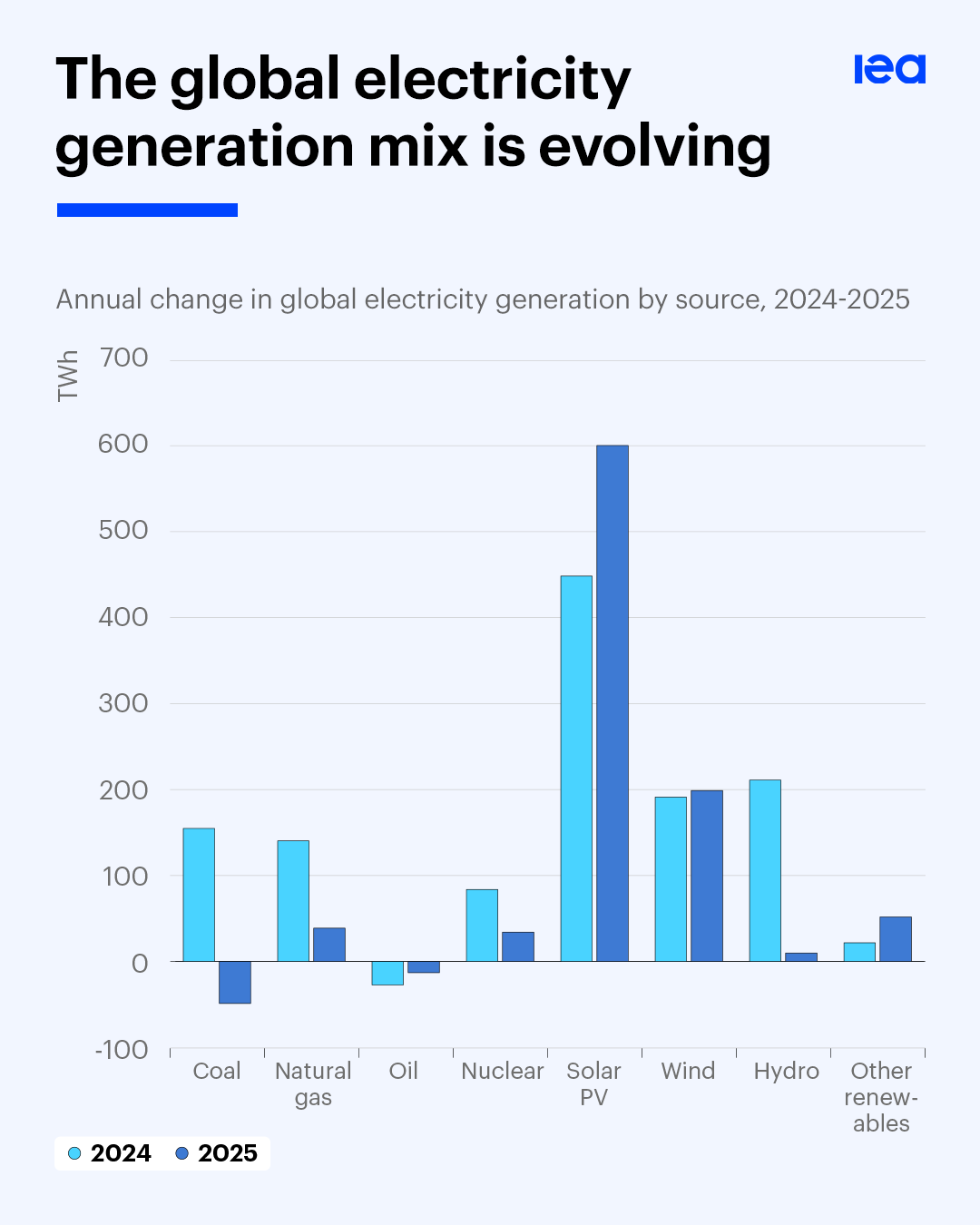
The strong contributions of low-emissions sources in meeting rising demand was particularly visible in the electricity sector, where annual consumption increased by 3% – more than twice as fast as overall energy demand.
Renewables – led by the boom in solar capacity – accounted for the vast majority of growth in global electricity generation to meet rising demand. At the same time, the amount of electricity produced from both coal and oil declined while the amount generated from natural gas increased modestly.
As a result, total electricity generation from renewables – which include hydropower, solar, wind, geothermal and bioenergy – virtually matched that from coal in 2025 on a global level, in line with IEA forecasts.
|
If you’re enjoying the newsletter, you can invite others to sign up here. And feel free to share our charts on platforms like X or LinkedIn.
We’ll be back in your inboxes with more charts based on IEA data and analysis in June.
|
|
|
|
|