Click here to view in your browser
Click here to sign up for this or any other IEA newsletter
|
|
Welcome to the IEA’s Clean Energy Transitions newsletter, where you can get up to date with our latest work building capacity around the world to achieve a secure and sustainable future for all
|
The IEA continues to work with governments to monitor and respond to the energy crisis caused by the war in the Middle East. Our latest analysis is set out in our Sheltering From Oil Shocks report, which examines ways to reduce vulnerability to energy price shocks, and our 2026 Energy Crisis Policy Response Tracker, which looks at policy measures adopted by countries in response to the unfolding energy crisis. You can also visit our dedicated topic page on the war's energy market implications.
|
In this month's edition:
- Global energy demand trends in 2025
- Methane emissions remain near record highs
- Critical minerals and supply chain resilience
- High-level dialogue on energy transitions ahead of COP31
|
|
Global Energy in 2025: Growth Across the Board
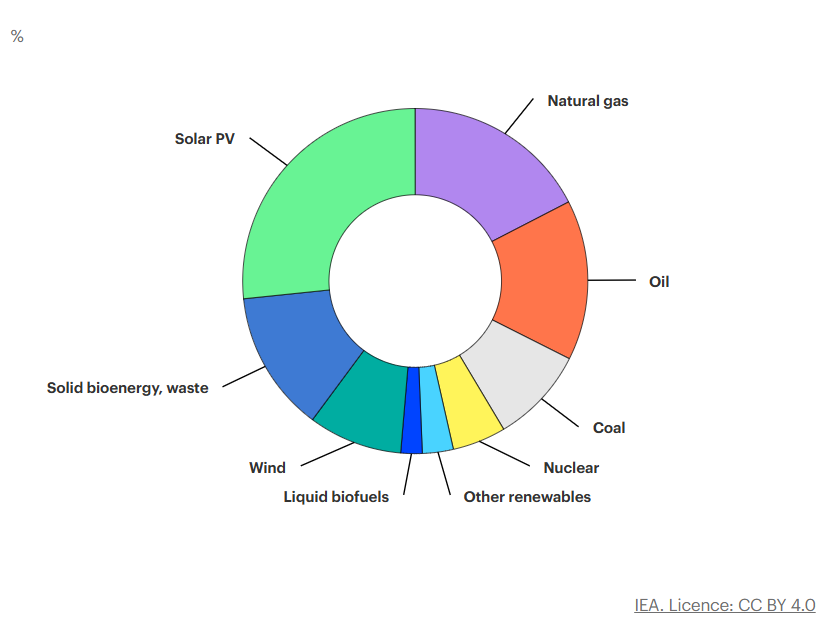
The global energy transition is gathering pace. Our Global Energy Review 2026 shows that low-emissions sources, including solar, wind, nuclear and hydropower, met nearly 60% of the growth in global energy demand last year. Solar PV recorded the largest single-year increase in electricity generation ever seen from any source – the first time on record that a modern renewable source has led global primary energy supply growth. It was followed closely by natural gas.
Renewable capacity additions reached a record 800 gigawatts globally, while clean energy technologies deployed since 2019 are now estimated to avoid 3 billion tonnes of CO₂ emissions annually. Together, these figures point to a transition that is advancing at scale – and one that the IEA continues to support and track closely.
|
|
Share of energy demand growth by source, 2025
|
|
|
|
Demand for fossil fuels also grew in 2025, though at a slower rate than in the year before. Coal consumption rose by just 0.4%, compared to 1.4% in 2024, reflecting cooler weather and strong renewables growth. Oil demand increased by 0.65 million barrels per day, with growth concentrated in petrochemicals and aviation. Meanwhile, rapidly rising electric vehicle sales – up by more than 20% to over 20 million units – kept road transport fuel demand in check. Natural gas demand grew by around 40 billion cubic metres, with its 1% growth rate marking a sharp slowdown from 2.8% in 2024, largely due to the dampening effect of higher prices.
|
|
Methane Emissions: The Implementation Gap
Published this month in association with the French G7 Methane forum, the IEA's Global Methane Tracker 2026 provides the world’s most comprehensive overview of methane emissions in the energy sector.
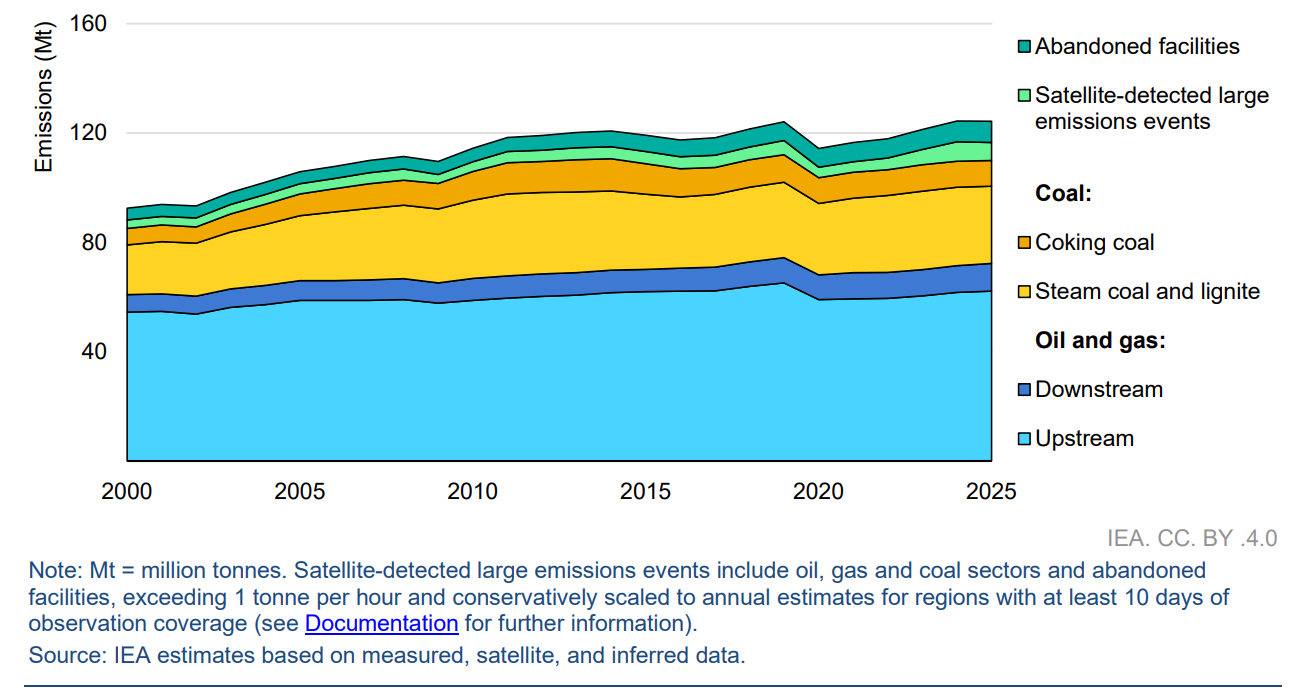
The report finds that methane emissions from the energy sector – including oil, natural gas, coal and bioenergy – plateaued near record highs in 2025. While this suggests progress in slowing emissions growth, it also highlights a widening implementation gap between commitments and action.
|
|
Methane emissions from fossil fuels, 2000-2025
|
|
|
The global picture is far from uniform. Around 70% of fossil fuel methane emissions come from just ten countries, while the methane intensity of oil and gas production varies widely, with the best performing countries scoring more than 100 times better than the worst.
Critically, the report also finds that tackling methane emissions could help support energy security during periods of market stress. Applying proven abatement measures across oil and gas operations globally could unlock nearly 100 billion cubic metres of gas each year, and eliminating non-emergency flaring could make available a further 100 billion cubic metres. These additional savings could compensate for unexpected gas supply shortfalls – together, they add up to double the supply volumes cut off due to the effective closure of the Strait of Hormuz.
A Practical Guide to Responding to Methane Alerts
Turning this data into action remains a challenge. Since 2023, the Methane Alert and Response System (MARS) has provided governments with free satellite-based alerts on major methane emission events. While response rates to MARS notifications have improved since the system was introduced in 2023, overall engagement remains low, with only around 12% of notifications receiving a response in 2025.
Recent joint analysis by IEA and the United Nations Environment Programme (UNEP) suggests that if all large emission events notified via MARS in 2025 had been mitigated within 30 days, global emissions could have been reduced by 6 million tonnes – roughly equivalent to total upstream emissions from the Caspian region.
To help close the implementation gap, the IEA has partnered with UNEP's International Methane Emissions Observatory (IMEO) to develop practical guidance for governments on responding to MARS notifications. The framework sets out a clear five-step process for action and is designed to be flexible, allowing governments to tailor it to their own legal, operational and financial contexts as new technologies continue to evolve. |
|
Critical Minerals: Supply Chain Risks in Focus
Critical minerals remain central to the energy transition, but supply chain risks are mounting. All six of the IEA's focus minerals – copper, lithium, nickel, cobalt, graphite and rare earth elements – face strong demand growth, while processing and refining remain highly concentrated. New export controls introduced in 2025 threaten supplies of materials vital to clean energy industries. Traceability is emerging as a key tool to address these risks, allowing governments and companies to track where minerals originate and how they move through supply chains.
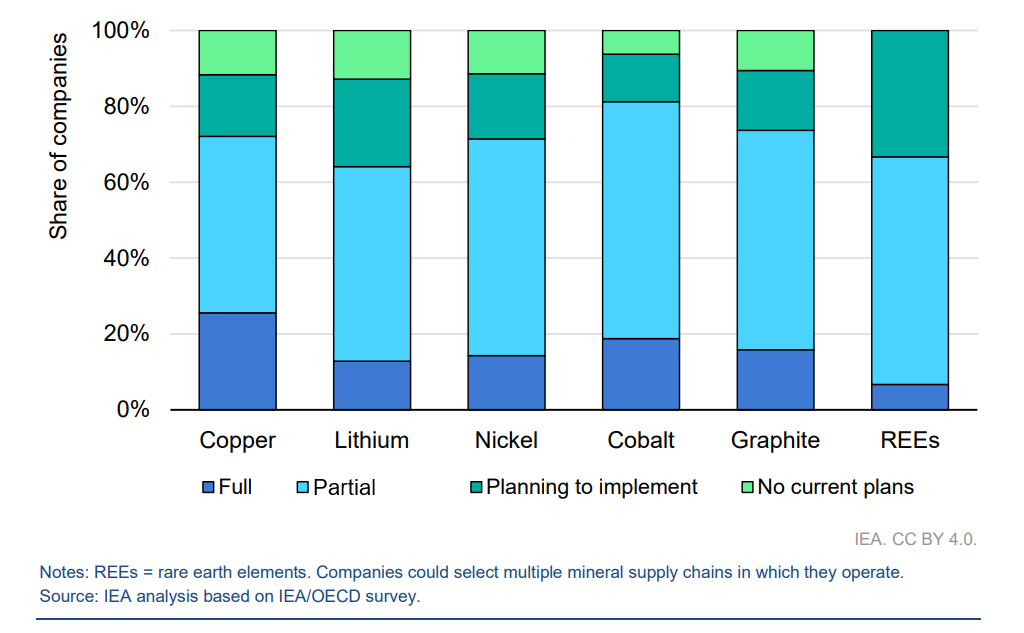
A joint IEA-OECD survey of more than 80 companies found that two thirds already have some form of traceability system in place, though end-to-end coverage remains limited. Costs, interoperability challenges and data-sharing barriers continue to hold back wider adoption. |
|
Companies' use of traceability systems across the six energy mineral supply chains
|
|
With three quarters of companies surveyed saying they are willing to increase investment in traceability over the next three years, the foundations are being laid for stronger, more resilient supply chains.
|
|
Looking Ahead to COP31
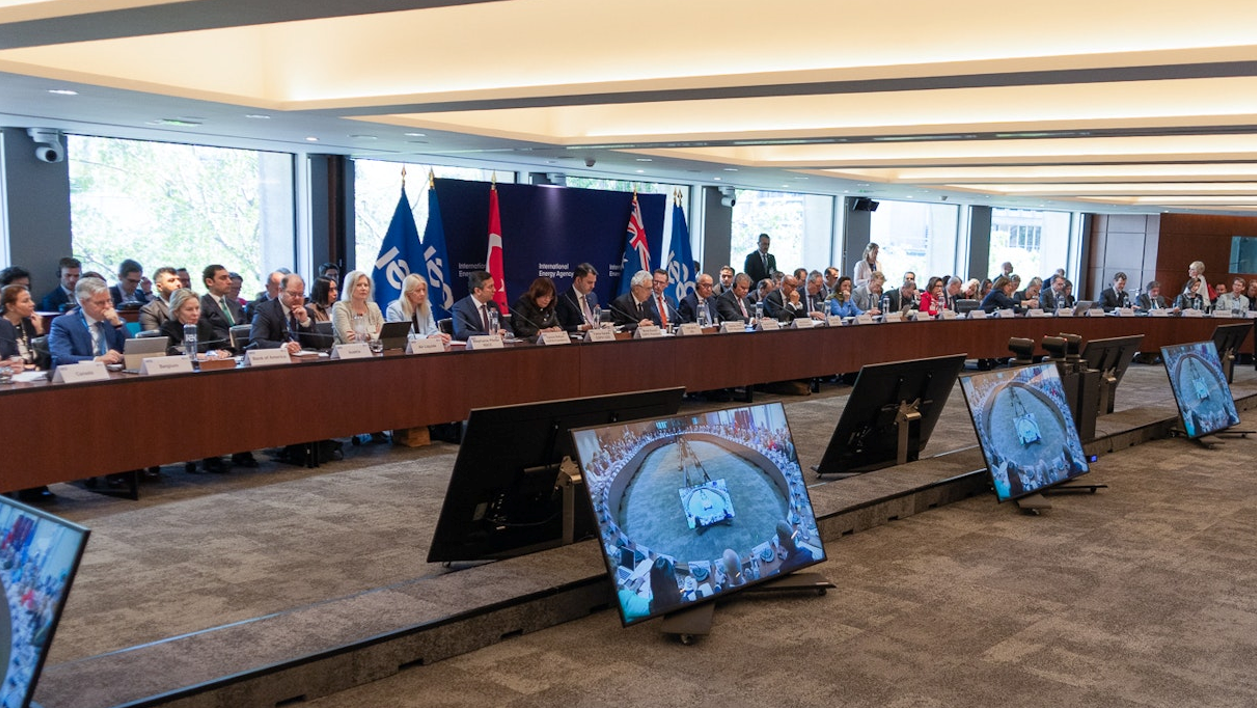
Many of these themes came together during the first in a series of High-Level Energy Transition Dialogues, held in partnership with the COP31 Presidency in Paris last month. The event highlighted how the IEA's analysis on energy markets is feeding into the broader international discussion on what is needed to advance energy transitions while strengthening energy security.
COP31 President-Designate Murat Kurum and IEA Executive Director Fatih Birol jointly chaired the roundtable discussion, with the participation of Australia, President of this year's COP negotiations. The dialogue brought together ministers, ambassadors and senior officials representing almost two thirds of the world's population, alongside private sector leaders and civil society representatives. A strategic partnership between the IEA and the COP31 Türkiye Presidency was also announced in support of the COP31 Energy Transition agenda.
|
|
|
Discussions also focused on electrification, zero waste and methane, energy efficiency and low-emissions technologies, as well as tools to strengthen energy security amid the ongoing energy crisis. Participants also agreed on the need to accelerate access to electricity and clean cooking, with the upcoming IEA Summit on Clean Cooking in Africa in July serving as a key milestone ahead of COP31. Further high-level meetings between the IEA and the COP31 Presidency are planned between now and November.
|
|
What we're listening to:
The latest episode of the IEA’s Everything Energy podcast examines what the complex and critical relationship between energy and artificial intelligence looks like in 2026 and how it could continue to evolve in the years ahead. You can listen on the IEA website, Apple Podcasts and Spotify. |
The Clean Energy Transition Programme the IEA’s flagship initiative to transform the world’s energy system to achieve a secure and sustainable future for all. The CETP turns targets into action, working to accelerate progress towards the goal of global net zero emissions through secure and people-centred clean energy transitions, with a focus on major emerging and developing economies. For a complete overview of the work achieved in 2025 by the Programme, check our annual report online.
|
|
|
|
|