|
An International Energy Agency Newsletter
Click here to view in your browser
|
|
Welcome back to Energy Snapshot, the International Energy Agency’s monthly newsletter focused on charts and data. In this edition, we look at how energy investment is evolving.
|
This is a crucial moment for global energy investment as the Strait of Hormuz crisis leads countries to review their energy policies, investment priorities and broader strategies, with a strong focus on bolstering their energy security.
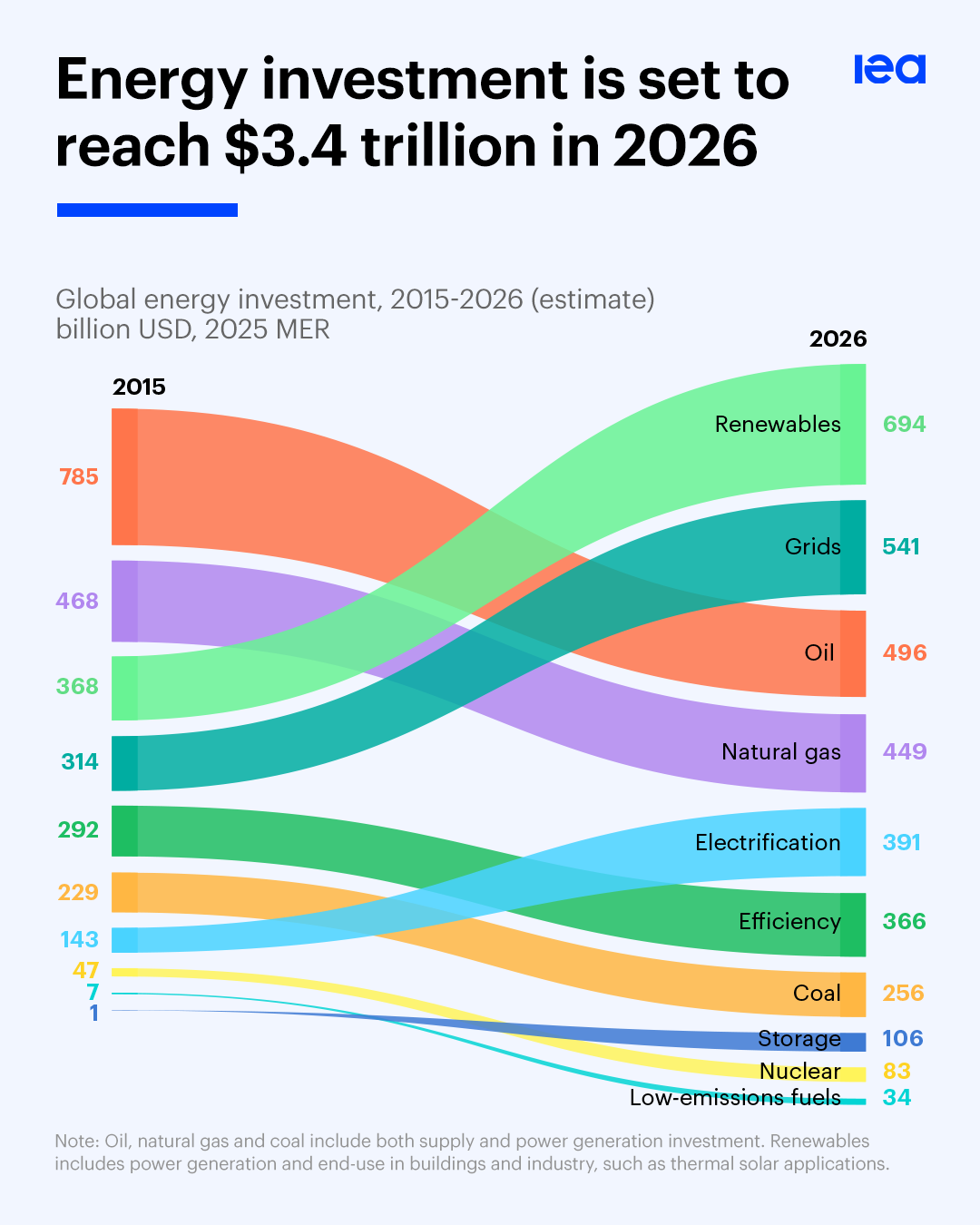
With demand for energy services growing around the world, total investment in energy in 2026 is set to reach an all-time high of $3.4 trillion, up from $2.6 trillion in 2015. And the breakdown of this spending is undergoing some important shifts, our recent World Energy Investment 2026 report shows. |
|
|
Energy security is moving higher up the global agenda as a result of two major energy crises this decade. The latest shock, triggered by the war in Middle East, is encouraging investment in a range of projects that diversify suppliers or routes to market, including ways to reduce reliance on the Strait of Hormuz.
It is also reinforcing interest among fuel-importing countries in energy sources available domestically – including renewables, nuclear power, efficiency improvements and, in some cases, coal. Investment in renewable power generation projects is expected to total around $665 billion in 2026, with well over half of it going towards solar projects alone. Nuclear investment in 2026 is expected to be 75% higher than a decade ago, while coal investment is set to reach its highest level since 2012.
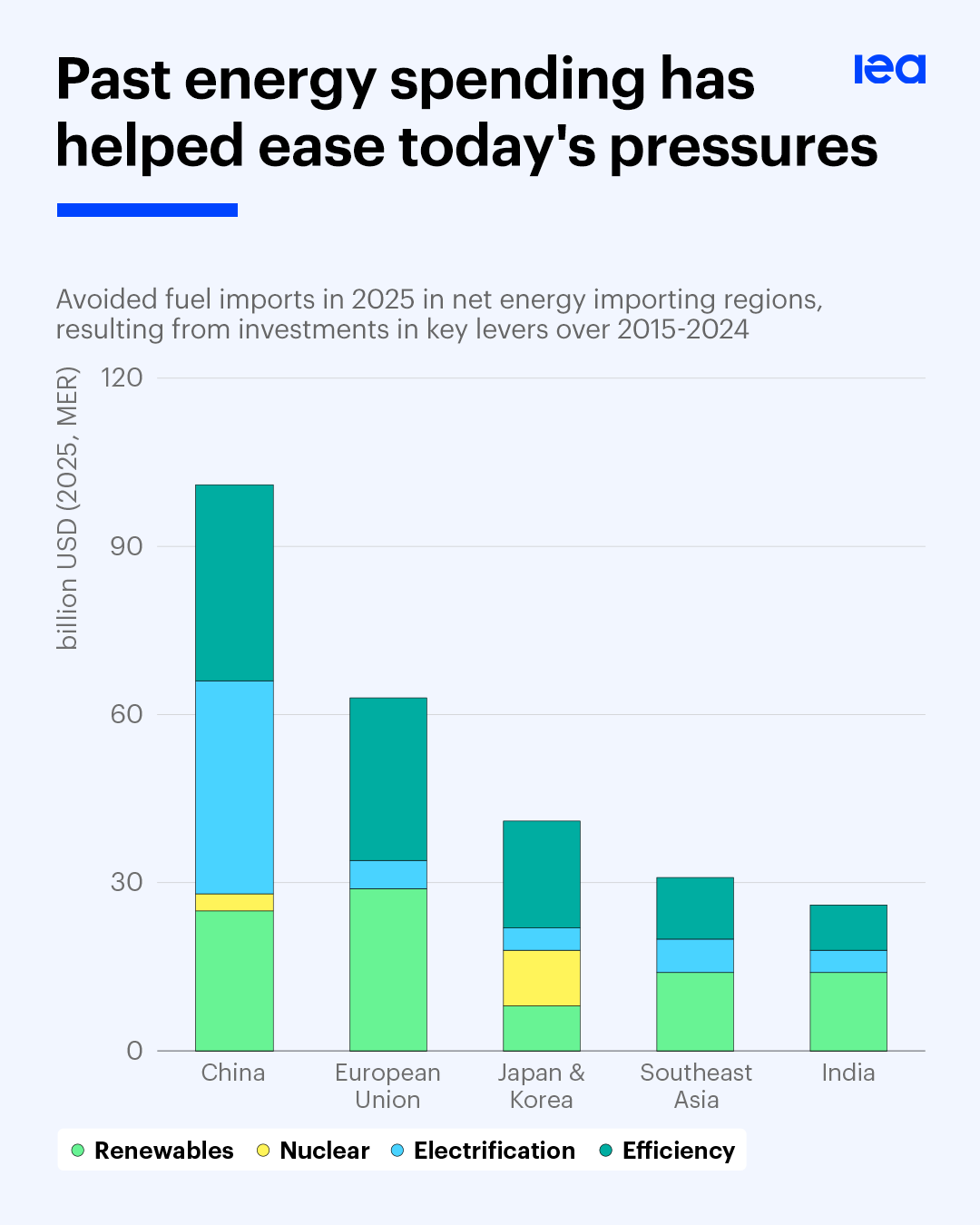
To better understand how investment choices impact energy security, our analysis looked back over the past decade. It found that cumulative investments in efficiency, electrification, biofuels and electricity generation from renewables and nuclear together avoided over $260 billion in fuel import costs among energy importing countries and regions in 2025.
|
|
|
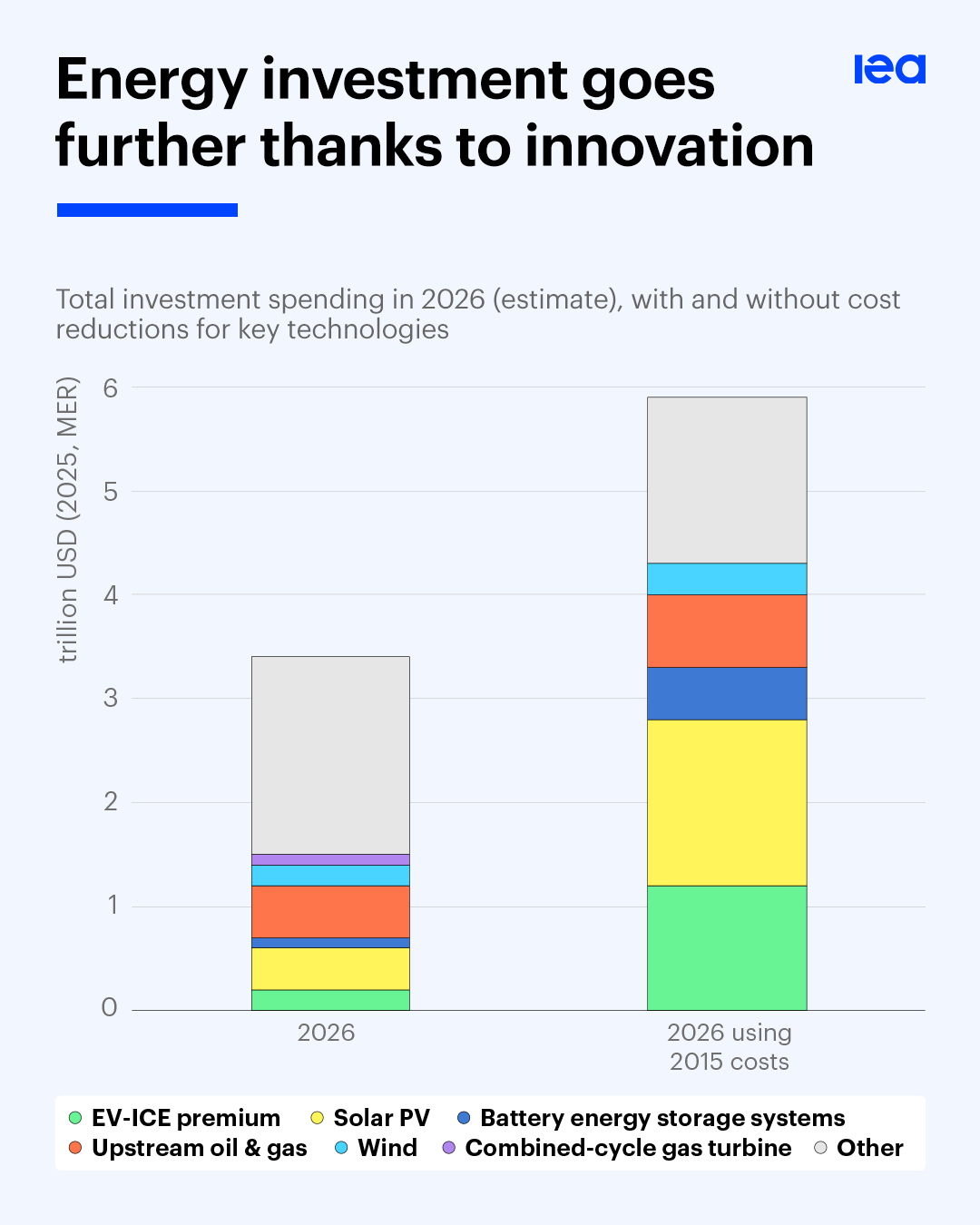
Another major trend has been the falling cost of key energy technologies, led by battery storage systems and solar PV, which have seen costs decline by nearly 80% since 2015 thanks to innovation and growing markets. If the costs of technologies across the energy system had remained where they stood a decade ago, an additional $2.5 trillion in spending would have been required in 2026 to support the same energy infrastructure build-out.
|
In a dynamic global environment, the precise contours of the new energy investment landscape will become clearer over time. In the months and years ahead, the IEA will continue to track the implications of disruptions, innovation and other key factors on the investment choices made by energy producers and consumers alike.
To learn more, read our World Energy Investment 2026 report and check out our Investment Data Explorer. You can also watch the report’s launch event with our Executive Director Fatih Birol and Chief Energy Economist Tim Gould. |
If you’re enjoying the newsletter, you can invite others to sign up here. And feel free to share our charts on platforms like X or LinkedIn.
We’ll be back in your inboxes with more charts based on IEA data and analysis in July.
|
|
|
|
|