|
An International Energy Agency Newsletter
Click here to view in your browser
|
|
Welcome back to Energy Snapshot, the International Energy Agency’s monthly newsletter focused on charts and data. In this edition, we explore what’s driving the surge in diesel prices.
|
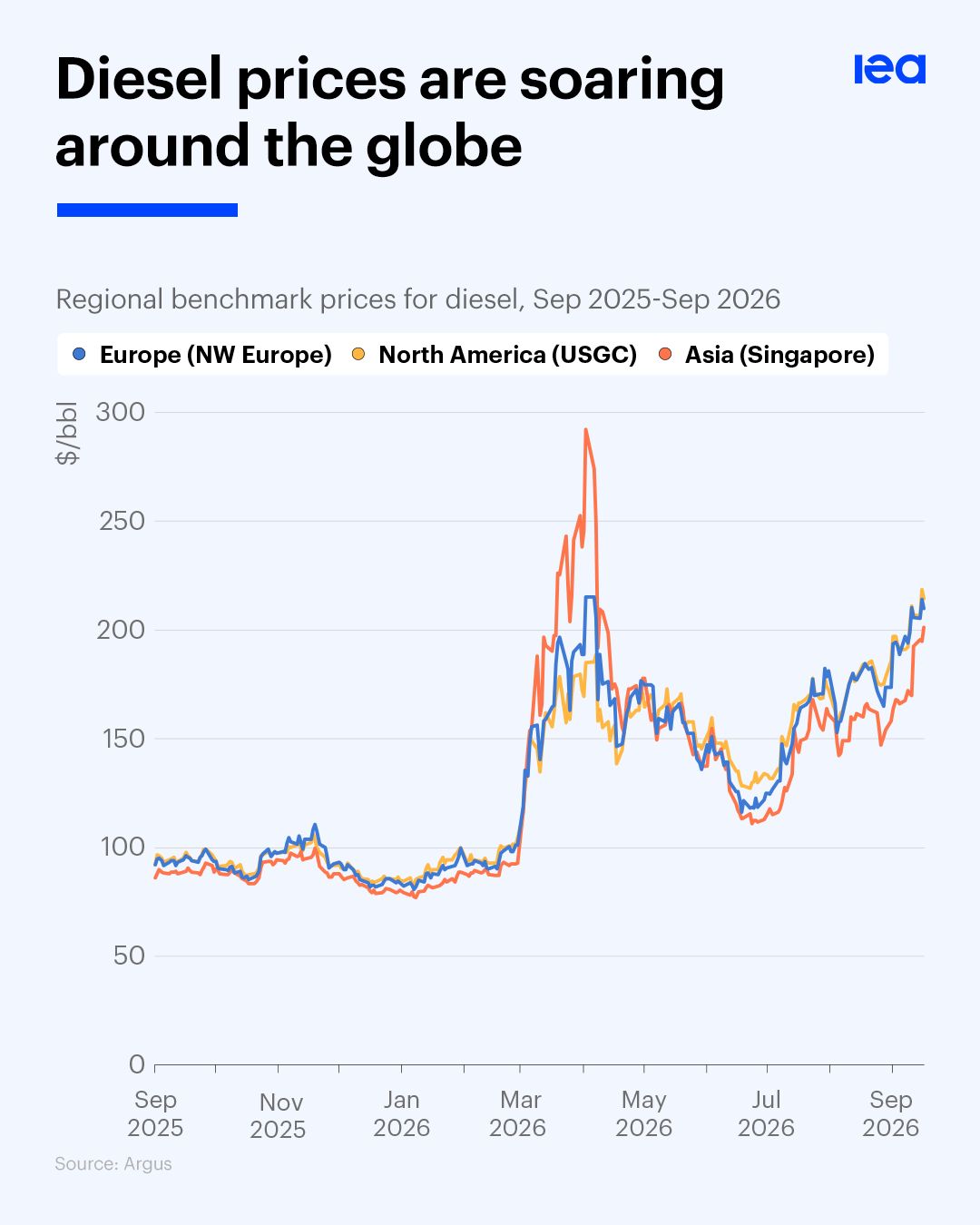
The price of oil has risen sharply in recent weeks as hostilities in the Middle East conflict have flared back up. Brent futures, the international benchmark for crude oil prices, have returned to levels last seen in May and are currently more than 40% higher than before the war began in late February.
But key oil products – the fuels that are made by refining crude oil, such as diesel, jet fuel and gasoline – are facing even greater pressures. Our latest Oil Market Report highlights that diesel markets are particularly strained, with prices recently surging to record levels in Europe and North America. This has major ramifications for diesel consumers and the global economy.
Diesel is a critical fuel used for road transport, shipping, agriculture, mining operations and more. In 2025, it accounted for almost 30% of the world’s total oil consumption.
|
|
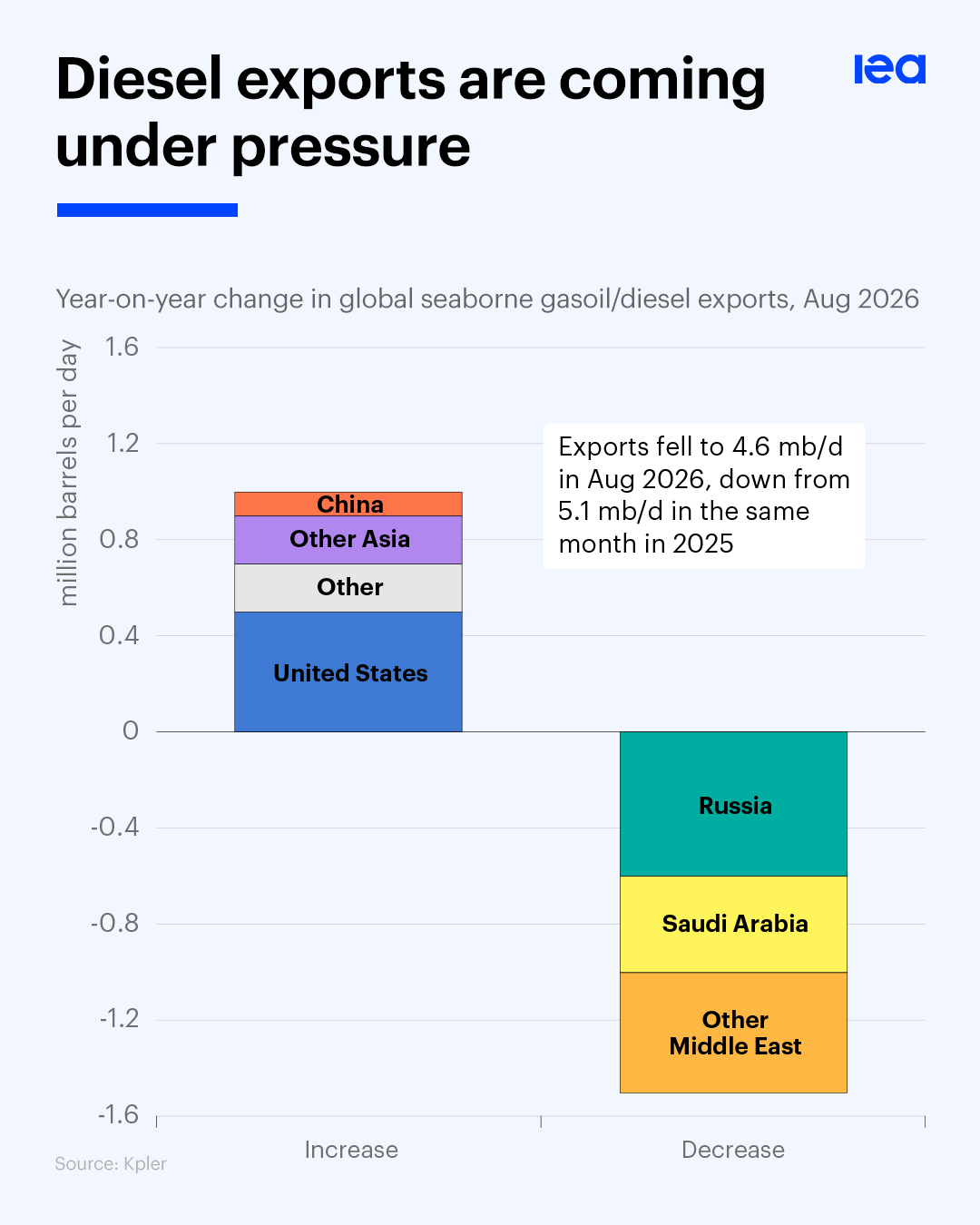
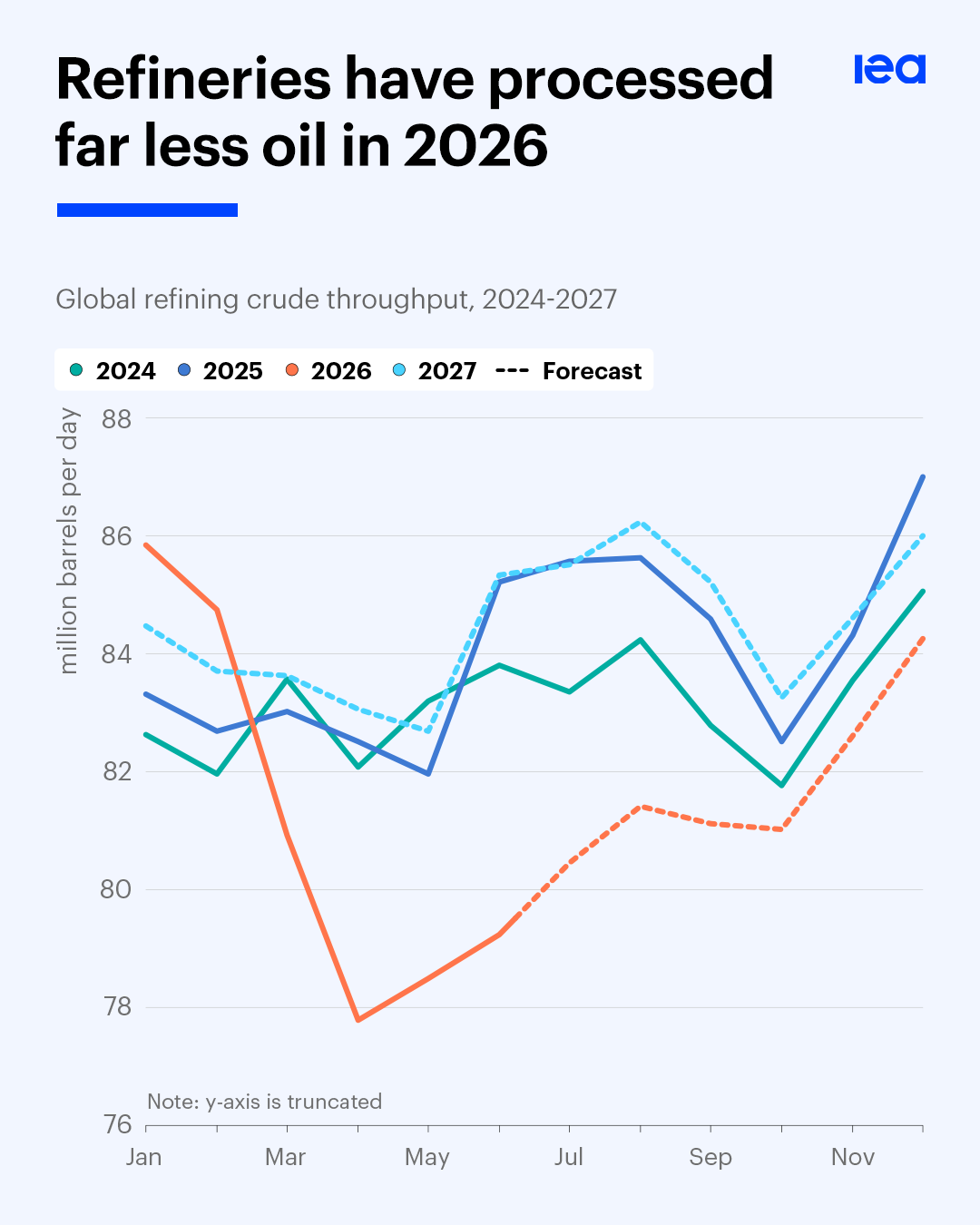
In 2025, Middle East producers exported 3.3 million barrels per day of refined oil products. But since the conflict began, as much as 3 million barrels per day of refining capacity has been unavailable due to attacks and a lack of viable export routes. The recovery in refining activity has been gradual, with 2.2 million barrels per day of capacity still offline through August.
At the same time, Ukrainian attacks on Russian refineries are adding to the squeeze in diesel markets. Russia has historically been the third largest producer of refined oil products globally, but its output has fallen sharply as drone strikes have disrupted operations. Ukraine has been attacking Russia’s oil infrastructure since 2022, but the range of its drones has expanded significantly, particularly during the first half this year, enabling strikes deeper inside Russia. In the first eight months of 2026, Ukrainian drones have hit a Russian refinery every three days, on average.
The impact has been substantial. Russian refinery output in June fell by 30% compared with a year earlier, reaching its lowest level in more than 20 years. The government has since restricted exports of diesel – a significant strategic shift for a country that previously exported roughly half of its diesel and gasoil output – and started importing gasoline to ensure adequate domestic supplies.
|
|
With exports from Russia and the Middle East under pressure, refineries elsewhere – including in the United States, China and other parts of Asia – are ramping up output. But they have been unable to fully offset the declines globally, with exports from the Middle East and Russia down nearly 75% year-over-year in August.
A key issue is that many refineries around the world are already stretched to capacity. This leaves few available options to prevent a further tightening of supplies and higher prices in the coming months.
|
|
If you’re interested in finding out more, we discuss the situation in diesel markets with IEA experts in the latest episode of our Everything Energy podcast, and a new commentary, which includes an interactive, takes a closer look at the impact of Ukraine’s attacks on Russian refineries.
For more on the broader situation in global oil markets, read our latest commentary on how markets are straining to fill the gap left by the Middle East supply shortfall – and the highlights and overview from our latest monthly Oil Market Report. |
If you’re enjoying the newsletter, you can invite others to sign up here. And feel free to share our charts on platforms like X or LinkedIn.
We’ll be back in your inboxes with more charts based on IEA data and analysis in October.
|
|
|
|
|
