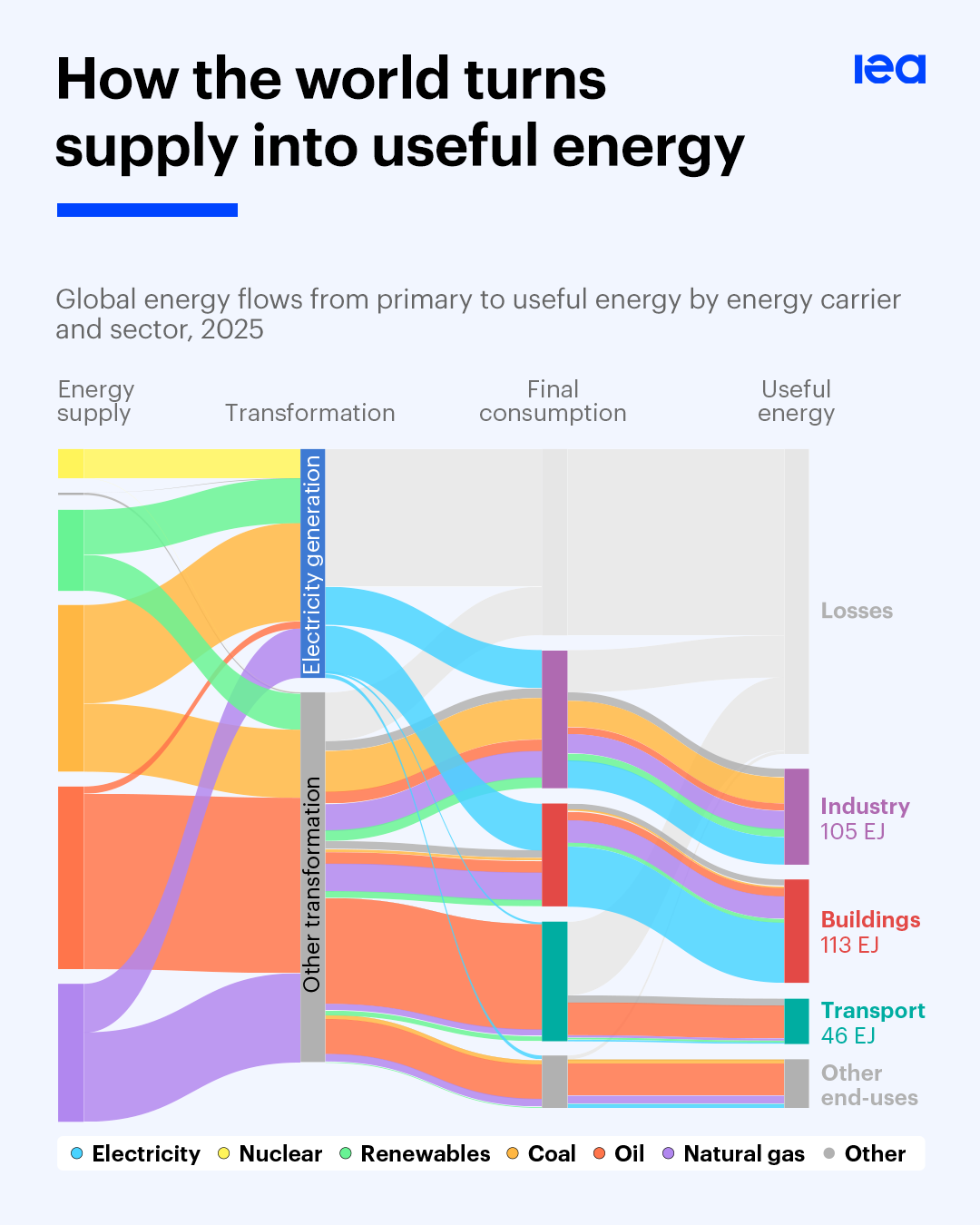
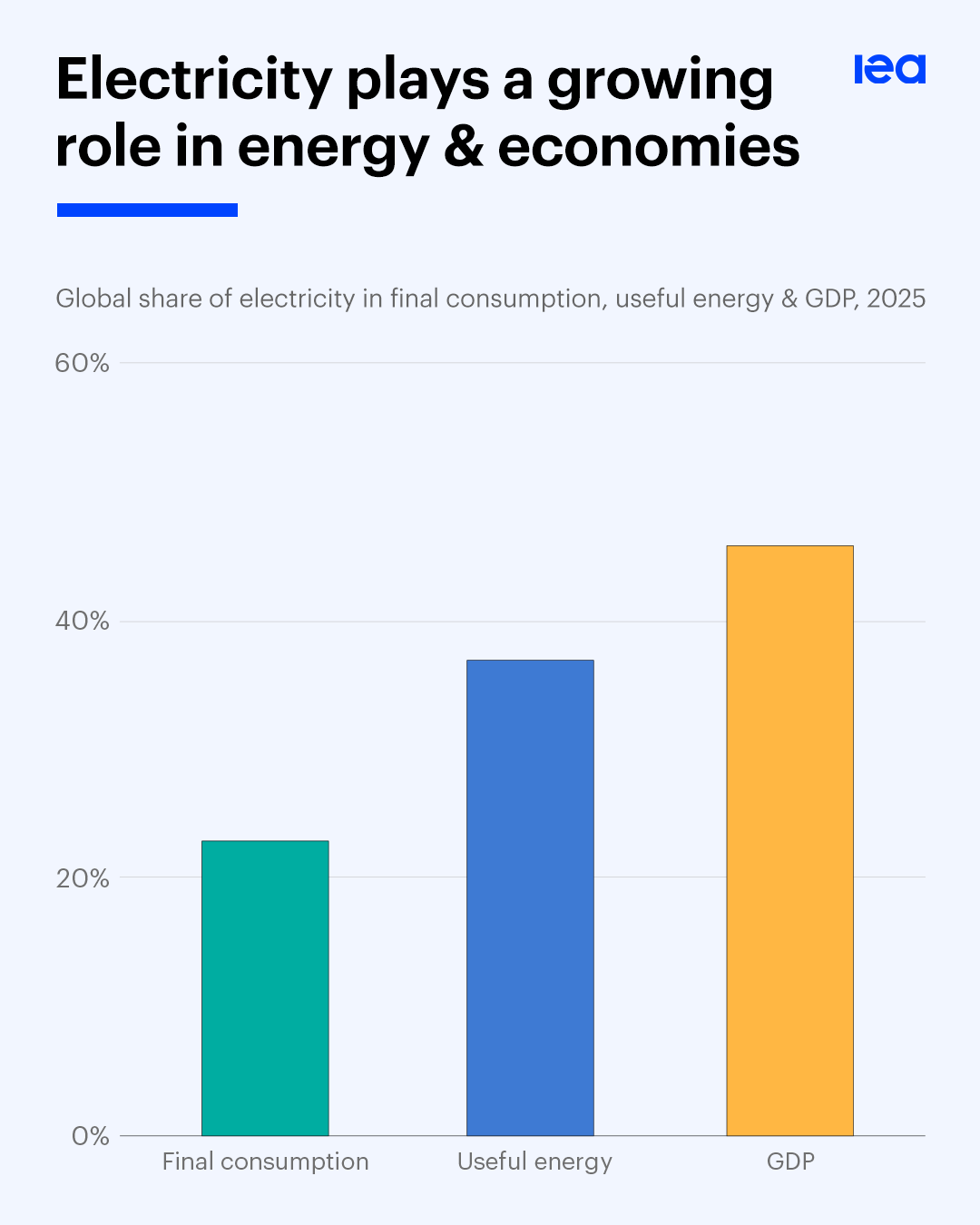
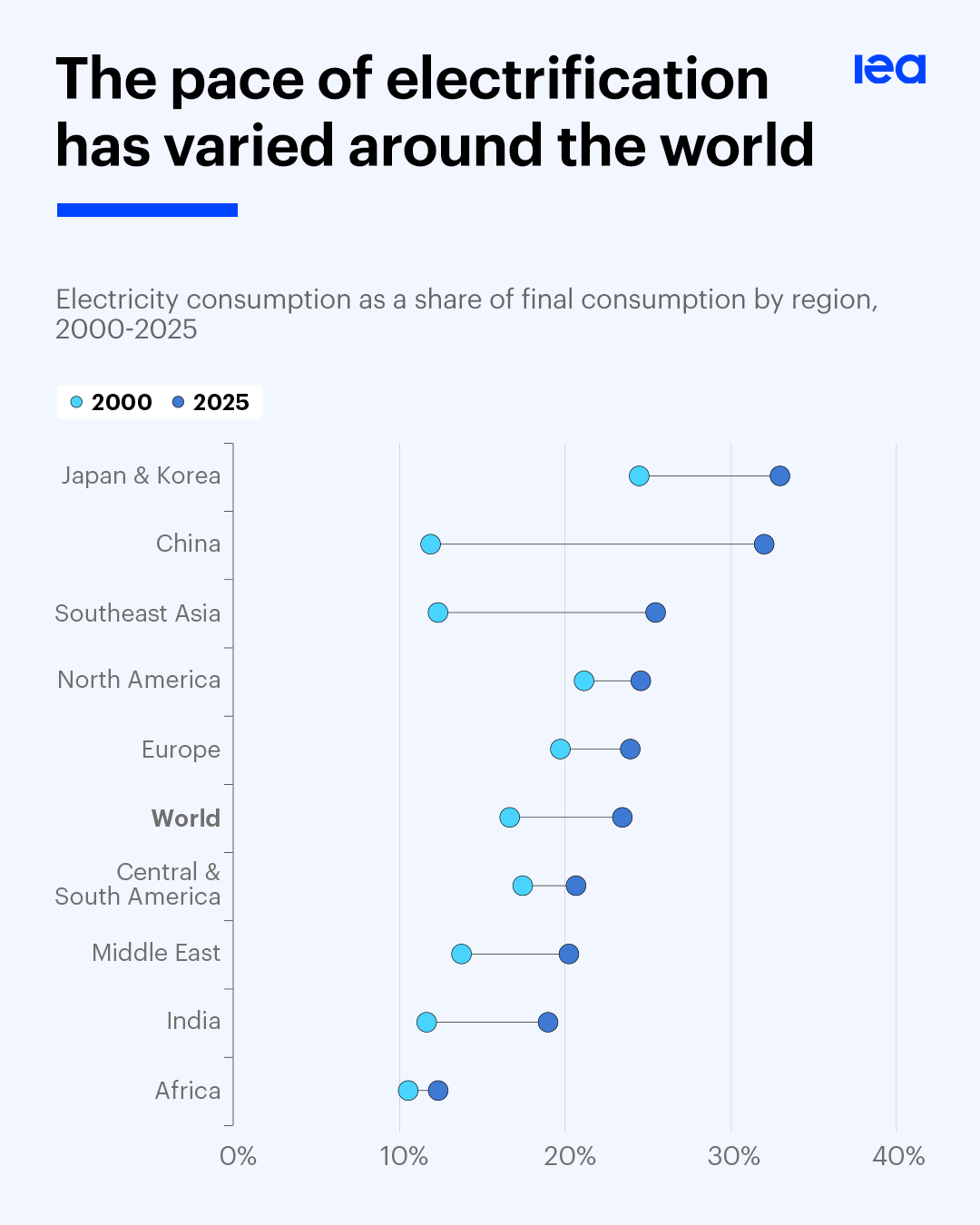
Some countries – especially those looking to reduce their reliance on fuel imports in favour of domestically produced energy – are now aiming to accelerate the use of electricity across transport, buildings and industrial production. This could mean expanding the uptake of electric cars, heat pumps and electric cookstoves, or using electricity to power more factory processes, such as those that require low- and medium-temperature heat.
Electrification rates across countries depend on the structure of their economies and energy systems, as well as their policy goals. That means the opportunities vary, too. In many emerging and developing economies, for example, opportunities include electrifying agricultural water pumps, expanding the use of electric two- and three-wheeler vehicles in densely populated cities, and enabling small businesses in sectors such as food and textiles to make greater use of electricity. By comparison, advanced economies and China typically have higher heating needs and larger fleets of cars. In both those areas, electric technologies can be cost-effective today.
At the same time, countries seeking to benefit from electrification’s potential will need to take other steps, as well. Avoiding bottlenecks in electricity systems will require scaling up investment in power generation, grids, and supply chains, alongside the implementation of smarter and more flexible technologies to match power supply and demand efficiently.
Evolving threats to electricity security also need to be addressed. These include concentrated supply chains for key technologies and the critical minerals that go into them; cybersecurity risks; and natural disasters and climate hazards.
For more on electrification, take a look at our
recent special report, which provides sector-by-sector analysis of its potential. And for the latest trends in the global electricity sector, read our
Electricity Mid-Year Update.