Renewable power is expanding on a huge scale – in part because of what’s happening on a much smaller one.
The IEA’s
latest analysis of the sector shows that renewable power capacity worldwide continues to surge, with 60% more capacity set to be added over the next five years compared with the first half of the 2020s. For the first time, growth in emerging and developing economies is set to match that in advanced economies.
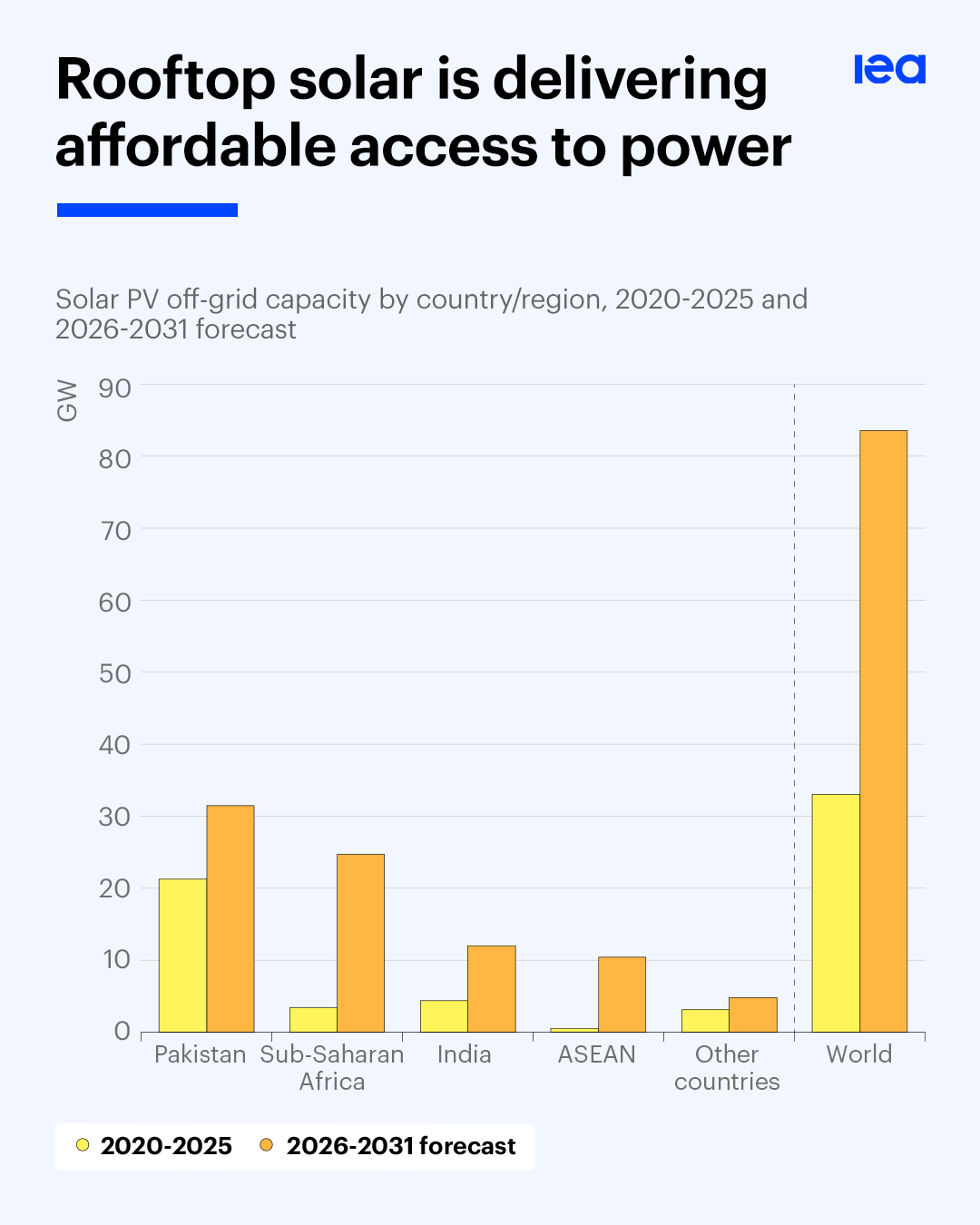
Vast solar parks and industrial wind farms built by utilities and developers are a major part of this story. But so are households and businesses, which are increasingly installing solar panels on their rooftops and in their backyards to secure more reliable and affordable electricity.
People have been putting solar panels on their rooftops for decades. But in the past, this was largely driven by government policies and financial incentives for consumers. Today, however, it’s increasingly taking place outside of dedicated support schemes.
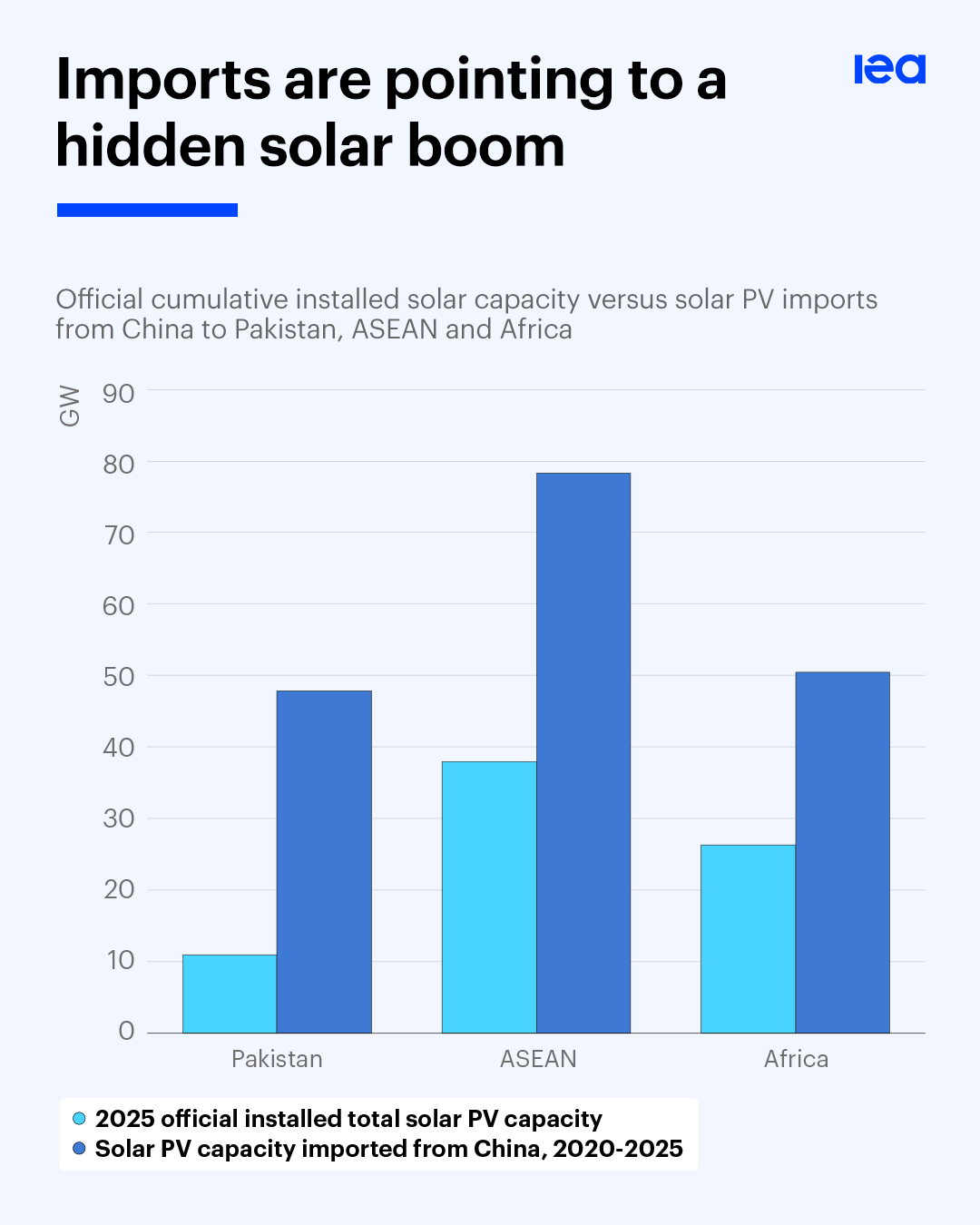
This trend is visible in the numbers. Or, more precisely, in the gaps between them.
According to official statistics from many developing economies, there is a significant disconnect between the reported level of installed solar PV capacity and the volume of solar panels imported from China, the world’s largest manufacturer.
The fate of these “missing” solar panels may seem like a mystery. But one explanation is that in regions without full access to electricity, or where there are recurrent power outages, consumers are taking the initiative to install small rooftop or garden systems themselves. Because these systems are not typically connected to electricity grids, governments can struggle to keep track of them using traditional methods of data collection.